Software Defined Network

Software-Defined Networking (SDN) is a networking architecture approach that allows network administrators to manage and optimize network resources through software-based controllers and applications. Unlike traditional network architectures, where network devices such as switches and routers have both control and data planes, SDN separates these planes, providing more flexibility and centralized control over the network.

Scenario:

Imagine you have a big office building with lots of rooms, and each room has its own light switch. Traditionally, you would need to go to each room to control the lights individually. This is similar to how traditional networks work, where each part of the network is managed separately.

SDN is like having a central control panel in the lobby of the office building where you can control the lights in all the rooms from one place. Instead of managing each light switch (or network component) separately, you control everything from a central point. This makes it easier to manage and adjust the lighting (or network) as needed.
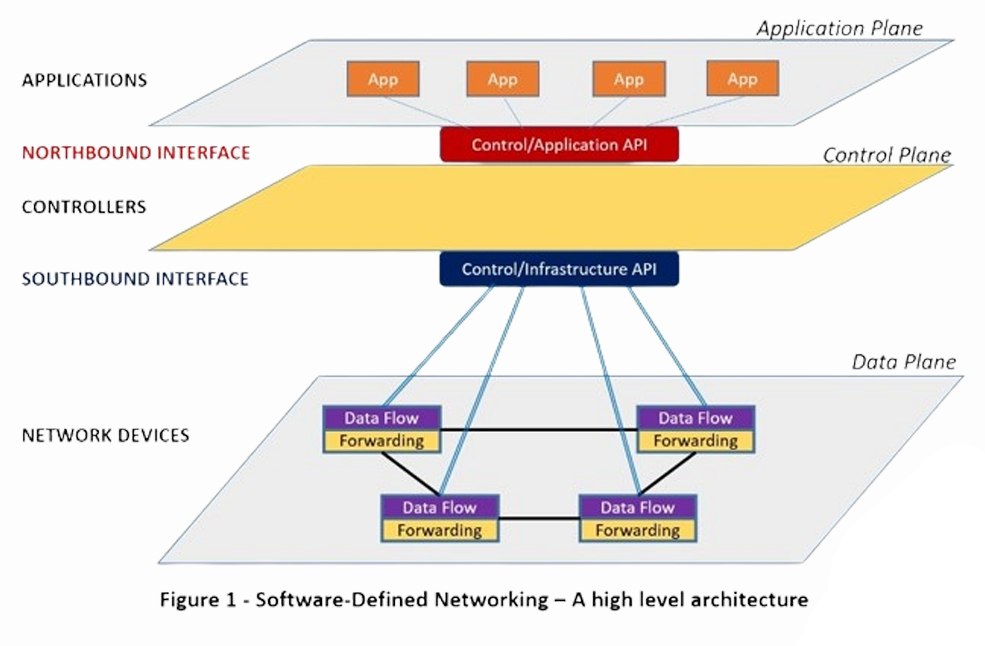
software defined network

Centralized Control

SDN centralizes network control by using a central controller or software platform that manages the entire network from a single point of control.

Programmability

Network behavior can be programmed and adjusted through software applications, enabling dynamic configuration and management.

Separation of Control and Data Planes

SDN separates the control plane (which makes routing decisions) from the data plane (which forwards traffic based on those decisions).

Network Virtualization

SDN supports the creation of virtual networks that can run over a physical network infrastructure. Multiple virtual networks can share the same physical hardware but operate independently.

Enhanced Network Visibility

SDN controllers provide detailed network insights and analytics, allowing administrators to monitor and analyze traffic patterns and
network performance.

Automated Network Management

SDN supports automation through network policies and predefined rules that can dynamically adjust network behavior without manual
intervention.

Dynamic Provisioning

SDN allows for on-demand provisioning of network resources, adapting to the needs of applications and users as they change.

Improved Security

SDN can implement security policies centrally, apply consistent security rules across the network, and quickly respond to security threats.

Integration with Cloud Services

SDN can be integrated with cloud environments to support cloud-based applications and services, providing consistent and scalable
network management.

Policy-Based Management

SDN enables the definition and enforcement of network policies that dictate how traffic should be handled based on application needs, user roles, or other criteria.